
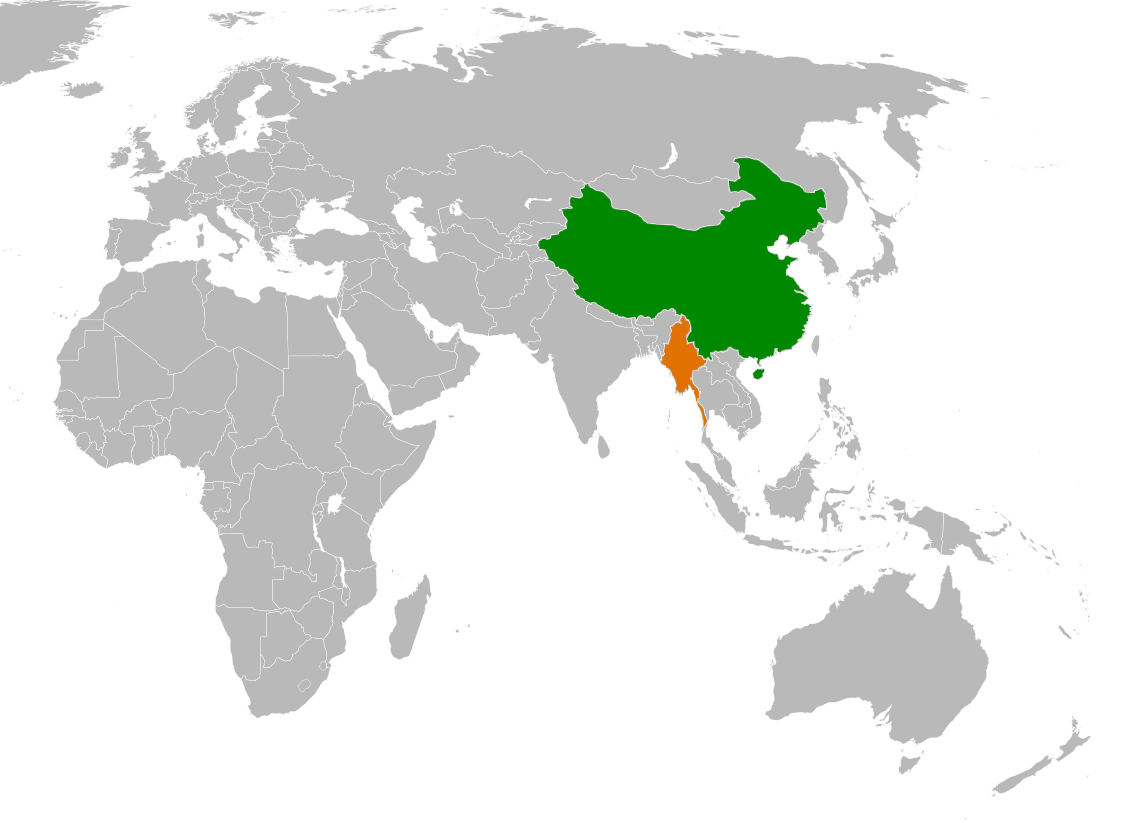
Translating Myanmar to Chinese can be surprisingly difficult if you rely on word-for-word conversion. Myanmar (Burmese) and Chinese are structurally very different languages, so a translation that looks correct at the word level may still sound unnatural, confusing, or even change the intended meaning. This becomes especially important when translating names, business messages, travel information, social media posts, or everyday conversations.
The good news is that you do not need to understand both languages at an advanced level to get better results. You mainly need to know what information matters before translating and where automated translation commonly fails. This guide explains the differences between Myanmar and Chinese, how to translate common phrases, how to handle formal and informal language, and how to check whether a Chinese translation actually communicates what you intended.
Whether you are a Myanmar speaker communicating with someone in China, preparing a business message, studying Chinese, or simply trying to understand Burmese text, the following practical approach can help you avoid the most common translation mistakes.
What Does Myanmar to Chinese Mean?
“Myanmar to Chinese” generally refers to translating text from the Myanmar language (Burmese) into Chinese.
There are two major forms of Chinese you may encounter:
- Simplified Chinese (简体中文) — commonly used in mainland China and Singapore.
- Traditional Chinese (繁體中文) — commonly used in Taiwan, Hong Kong and Macau.
For communication with people in mainland China, Simplified Chinese is normally the appropriate choice.
However, choosing the writing system is only the first step. A good translation also needs to account for context, tone, sentence structure and cultural usage.
Why Myanmar-to-Chinese Translation Can Be Difficult
Myanmar and Chinese belong to different language families and use different grammatical structures.
Myanmar is generally written from left to right using its own rounded script, while Chinese uses characters. The two languages also organize information differently.
For example, Burmese commonly places the verb toward the end of a sentence. Chinese usually follows a subject-verb-object pattern.
A literal translation can therefore produce a sentence that contains all the right words but still feels unnatural.
Word Order Matters
A Burmese sentence may organize information differently from its Chinese equivalent.
Instead of translating each word individually, the translator needs to identify:
- Who is performing the action?
- What is happening?
- When is it happening?
- Where is it happening?
- What is the intended tone?
Only after answering these questions should the sentence be reconstructed in Chinese.
This is one of the most important differences between translation and simple word substitution.
Simplified Chinese vs. Traditional Chinese
Before translating, decide which Chinese writing system you need.
| Type | Common Use |
|---|---|
| Simplified Chinese | Mainland China, Singapore |
| Traditional Chinese | Taiwan, Hong Kong, Macau |
For example, the Chinese word for “country” is:
- Simplified: 国家
- Traditional: 國家
The pronunciation may remain essentially the same, but the written characters differ.
If you are sending a message to someone in mainland China, Simplified Chinese is usually the safer choice.
Common Myanmar-to-Chinese Translations
Here are some useful everyday examples.
Hello
Myanmar:
မင်္ဂလာပါ
Chinese:
你好
Pinyin:
Nǐ hǎo
Meaning:
Hello
Thank You
Myanmar:
ကျေးဇူးတင်ပါတယ်
Chinese:
谢谢
Pinyin:
Xièxie
Meaning:
Thank you
How Are You?
A natural Chinese equivalent is:
你好吗?
Pinyin:
Nǐ hǎo ma?
Meaning:
How are you?
In real Chinese conversation, however, people often use more context-specific greetings rather than repeatedly asking this exact sentence.
I Don’t Understand
Chinese:
我不明白。
Pinyin:
Wǒ bù míngbai.
Meaning:
I don’t understand.
Another useful phrase is:
我听不懂。
This means:
I can’t understand what you’re saying.
The second expression is particularly useful when you cannot understand spoken Chinese.
Myanmar Names in Chinese
Names require special attention.
A Myanmar person’s name should not normally be translated according to its dictionary meaning. Instead, Chinese may use a phonetic transliteration, especially when referring to a person’s official or publicly recognized name.
For example, a name may be represented using Chinese characters chosen primarily for pronunciation.
This creates an important distinction:
Translation asks, “What does this word mean?”
Transliteration asks, “How can this name be represented in another writing system?”
Confusing these two processes can produce an incorrect person’s name.
Why Name Translation Is Tricky
Chinese characters carry meanings in addition to sounds.
A translator therefore needs to choose characters that:
- Approximate the original pronunciation
- Do not create an embarrassing meaning
- Fit common Chinese naming conventions
- Remain recognizable to Chinese readers
For official documents, names should not be casually translated. The preferred Chinese form may depend on passports, previous records or the relevant institution.
Translating Myanmar for Business
Business translation requires more than linguistic accuracy.
Imagine a Myanmar business owner sends this message:
“I want to discuss the price and delivery time with you.”
A literal Chinese translation might technically communicate the meaning, but a professional business version would usually be phrased more naturally:
我想和您讨论一下价格和交货时间。
The use of 您 instead of 你 creates a more respectful tone.
That small difference can matter in professional communication.
Formal Chinese vs. Casual Chinese
Consider these two forms:
你可以帮我吗?
“Can you help me?”
您可以帮我吗?
“Could you help me?”
Both can be grammatically correct, but 您 is more respectful.
For customers, business partners, older people or formal situations, the polite form can be more appropriate.
Translating Myanmar for Travel
Travel situations often require short, practical sentences rather than sophisticated language.
Useful Chinese phrases include:
这个多少钱?
How much is this?
厕所在哪里?
Where is the bathroom?
我想去这里。
I want to go here.
请帮帮我。
Please help me.
我不会说中文。
I don’t speak Chinese.
你会说英语吗?
Do you speak English?
These expressions are generally more useful to a traveler than learning long textbook sentences.
A Practical Travel Tip
If you are using a translation app while traveling, translate the shortest complete idea possible.
Instead of entering:
“Could you please tell me whether there is a restaurant somewhere nearby where I can eat?”
Use:
“附近有餐厅吗?”
This means:
Is there a restaurant nearby?
Shorter sentences usually give translation systems less opportunity to misunderstand the intended structure.
Myanmar to Chinese for Social Media
Social media translation is another situation where literal translation often fails.
Myanmar expressions can contain emotion, humor, indirect meaning or cultural references that do not have a direct Chinese equivalent.
For example, a humorous Burmese caption may need to be adapted rather than translated literally.
There are three possible goals:
- Literal translation — preserve the original wording.
- Natural translation — preserve the meaning in fluent Chinese.
- Localized adaptation — preserve the message and emotional effect for Chinese readers.
For social media, the second or third approach is often better.
How to Translate Myanmar Text More Accurately
A reliable workflow can make a major difference.
Step 1: Identify the Purpose
Ask what the translation will be used for.
Is it:
- A personal message?
- A business email?
- A legal document?
- A travel conversation?
- A product description?
- A social media caption?
- A school assignment?
The same Burmese sentence can require different Chinese wording depending on the situation.
Step 2: Identify the Tone
Determine whether the original is:
- Casual
- Friendly
- Respectful
- Formal
- Emotional
- Professional
- Humorous
Do not automatically make everything formal.
Step 3: Translate the Meaning
Focus on the intended message rather than the individual words.
Step 4: Rebuild the Chinese Sentence
Chinese should sound like something a Chinese speaker would naturally say.
Step 5: Check Names and Numbers
Pay special attention to:
- Personal names
- Company names
- Dates
- Prices
- Addresses
- Phone numbers
- Measurements
- Product codes
These are easy to damage during automated translation.
Common Myanmar-to-Chinese Translation Mistakes
Mistake 1: Translating Every Word Literally
This is perhaps the most common problem.
A sentence can be grammatically understandable but unnatural because the translator preserved Burmese word order.
Better approach: translate the meaning and reconstruct the sentence naturally.
Mistake 2: Ignoring Politeness
Chinese has several ways to express relationships and levels of respect.
Using 你 when 您 would be more appropriate may make a professional message sound too casual.
Mistake 3: Translating Names as Ordinary Words
Names should usually be transliterated or preserved according to their established Chinese forms rather than translated for dictionary meaning.
Mistake 4: Forgetting Chinese Characters
Pinyin is useful for pronunciation, but if your goal is written communication with Chinese readers, characters are normally essential.
Mistake 5: Assuming One Chinese Translation Fits Every Situation
There may be several correct translations.
For example, a phrase used between friends may sound strange in a business setting.
Context determines the best choice.
A Useful Comparison: Human Translation vs. Machine Translation
Translation tools are extremely useful for simple communication, but they are not equally reliable for every task.
| Situation | Machine Translation | Human Review |
|---|---|---|
| Simple greeting | Usually sufficient | Optional |
| Basic travel phrase | Usually sufficient | Helpful |
| Casual message | Often sufficient | Helpful |
| Business communication | Useful first draft | Recommended |
| Legal documents | Not enough alone | Essential |
| Complex cultural expression | Can struggle | Strongly recommended |
| Names and official records | Needs verification | Recommended |
The best approach is not necessarily to reject automated translation.
Instead, use it for speed and then review important content for meaning, tone and accuracy.
Three Less-Obvious Translation Insights
Context Can Change the Best Chinese Word
A single Burmese word may correspond to several Chinese words depending on what is being discussed.
For example, a term relating to “work” could require different Chinese vocabulary when referring to employment, a task, a workplace or an assignment.
The surrounding sentence often matters more than the dictionary entry.
Pronunciation Is Not Enough for Names
A Chinese transliteration that sounds close to a Myanmar name may still be unsuitable because the selected characters could carry an unwanted meaning.
For names, sound and meaning need to be considered together.
The Best Translation May Be Shorter
Myanmar and Chinese do not always express the same idea with the same number of words.
A long Burmese sentence can sometimes become a short, natural Chinese sentence without losing information.
This is not “leaving words out.” It is adapting the sentence to the natural structure of Chinese.
When Should You Ask for a Human Translation?
Consider professional review when the consequences of an error are serious.
This includes:
- Immigration documents
- Contracts
- Legal correspondence
- Medical information
- Financial documents
- Employment agreements
- Official certificates
- International business agreements
For these situations, a translation that is merely understandable may not be good enough.
Accuracy, terminology and consistency can all have legal or financial consequences.
Frequently Asked Questions
What is the best way to translate Myanmar to Chinese?
The best approach depends on the purpose of the translation. For simple conversations, machine translation can be useful, while important business or official material benefits from human review. Always consider context, tone, names and numbers rather than translating individual words alone.
Should I use Simplified or Traditional Chinese?
Use Simplified Chinese when communicating primarily with people in mainland China or when the destination specifically requests it. Traditional Chinese is generally appropriate for Taiwan, Hong Kong and Macau. If you are unsure, ask the recipient which writing system they prefer.
Can I translate Myanmar names into Chinese?
Yes, but names are usually handled through transliteration rather than ordinary dictionary translation. The Chinese characters should approximate the original pronunciation while avoiding inappropriate meanings. For official documents, use the established or officially accepted Chinese form whenever one exists.
Is Google or another translation app accurate for Myanmar to Chinese?
Translation apps can be useful for everyday phrases and straightforward sentences, but accuracy depends heavily on context. They can struggle with slang, cultural expressions, names, formal language and ambiguous Burmese wording. Important documents should be reviewed by someone proficient in both languages.
How can I make a Myanmar-to-Chinese translation sound natural?
Start with the intended meaning, identify the tone, and then rewrite the sentence according to normal Chinese grammar rather than preserving Burmese word order. Short, clear sentences are often easier to translate accurately. For professional communication, also check whether the level of politeness is appropriate.
Conclusion
Myanmar to Chinese translation is not simply a matter of replacing Burmese words with Chinese characters. The strongest translations preserve the original meaning while adapting sentence structure, tone and cultural context for Chinese readers.
For everyday communication, short and clear sentences can produce excellent results. For business messages, names, social media content and formal documents, additional attention is needed because a technically correct translation can still sound unnatural or communicate the wrong nuance.
The most useful rule is simple: translate the meaning, not just the words. Once you understand the purpose, audience and tone of the original message, choosing natural Chinese becomes much easier.
