
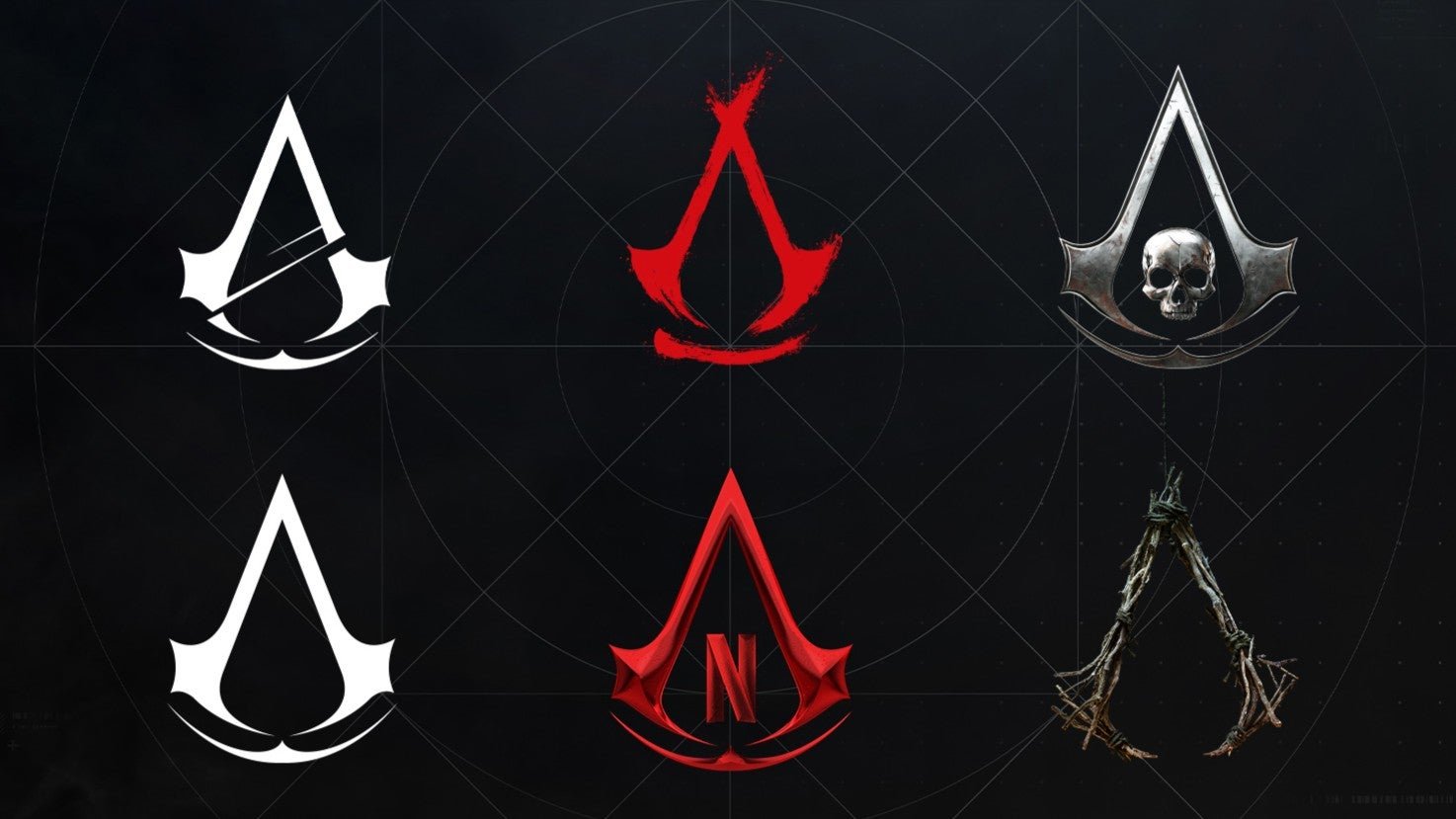
If you are getting into Assassin’s Creed today, the biggest problem is not finding a game to play—it is knowing where to start. The series has grown from a focused stealth-action adventure into a huge historical franchise spanning ancient Greece, Viking-era England, Renaissance Italy, the Caribbean, revolutionary France, Victorian London, and Japan. With so many games, characters, timelines, and gameplay systems, it is easy for a new player to feel lost.
The good news is that you do not need to play every Assassin’s Creed game in release order to enjoy the franchise. Each major entry offers a different setting and style, while the recurring conflict between the Assassins and Templars provides the larger connection.
This guide explains what makes Assassin’s Creed special, how the major games differ, where beginners should start, how the modern storyline fits into the historical adventures, and which gameplay features are genuinely worth paying attention to. It also highlights a few less obvious details that can change how you experience the series rather than simply listing every game.
What Is Assassin’s Creed?
Assassin’s Creed is an action-adventure video game franchise created by Ubisoft. The series combines historical settings with fictional characters, stealth, exploration, combat, parkour, and a continuing science-fiction storyline.
At the center of the franchise is a long-running conflict between two ideological groups:
- The Assassins, who generally value individual freedom and choice
- The Templars, who generally believe peace can be achieved through order and control
The games rarely present this conflict as a simple battle between good and evil. Both sides have understandable motivations, and individual characters can challenge the beliefs of their own organization.
That moral tension is one reason the series has lasted so long.
Why Assassin’s Creed Became So Popular
The original games offered something unusual: the opportunity to explore historical cities as interactive environments rather than merely backgrounds.
You could climb buildings, move through crowds, investigate landmarks, enter restricted areas, and approach objectives from different directions.
The formula became especially memorable because of three ingredients.
Historical exploration
The developers recreate recognizable periods of history and combine real locations and figures with fictional stories.
Stealth and assassination
The player often has to identify a target, study the surrounding area, find an opportunity, and decide how to approach the assassination.
Free movement
Parkour became one of the franchise’s defining features. Buildings were not simply obstacles; they became pathways.
That combination made early Assassin’s Creed feel different from conventional action games.
Assassin’s Creed Games in Release Order
The main series has changed significantly over time.
A simplified release progression looks like this:
- Assassin’s Creed — 2007
- Assassin’s Creed II — 2009
- Brotherhood — 2010
- Revelations — 2011
- Assassin’s Creed III — 2012
- Black Flag — 2013
- Rogue — 2014
- Unity — 2014
- Syndicate — 2015
- Origins — 2017
- Odyssey — 2018
- Valhalla — 2020
- Mirage — 2023
- Shadows — 2025
There are also numerous spin-offs, remastered versions, mobile releases, and side projects.
For someone new to the franchise, release order is useful for understanding how the mechanics evolved, but it is not necessarily the best way to experience the series.
Where Should a Beginner Start?
There is no single correct starting point.
Your best entry depends on what you want from the game.
Start with Assassin’s Creed II for the classic experience
If you want to understand why the franchise became famous, Assassin’s Creed II is one of the best choices.
It introduces Ezio Auditore, one of the most important characters in the series, and provides a strong mixture of:
- Story
- Stealth
- Parkour
- Exploration
- Assassinations
- Character development
Its age is noticeable, particularly compared with modern open-world games, but its atmosphere and storytelling remain important to the franchise.
Start with Black Flag for exploration
If pirates, ships, treasure hunting, and open-world exploration sound more appealing, Black Flag is an excellent entry point.
Its naval gameplay became so popular that the pirate adventure sometimes feels like its own genre inside Assassin’s Creed.
Start with Origins for modern gameplay
If older games feel dated to you, Origins is a better starting point.
It introduced a more RPG-oriented structure with:
- Character levels
- Equipment rarity
- Skill trees
- Larger open-world exploration
- More flexible combat
It also tells the story of Bayek of Siwa and the origins of the Assassin Brotherhood.
Start with Mirage for a shorter stealth-focused experience
Mirage deliberately moves closer to the traditional Assassin’s Creed formula.
It emphasizes:
- Stealth
- Parkour
- Assassination
- Investigation
- A more compact city
For players who prefer focused games rather than enormous open worlds, it is an appealing option.
The Assassin’s Creed Timeline Explained
One confusing part of the franchise is that there are effectively two timelines.
The first is the historical setting experienced by the player.
The second is the modern-day storyline surrounding people who use technology to experience genetic memories from their ancestors.
The Animus is the technology that makes this possible.
This means a game can spend dozens of hours in ancient Greece while still contributing to a modern storyline.
Why the Modern Story Matters
The modern sections are easy to dismiss when you are enjoying the historical adventure.
However, they provide the framework connecting different games.
The Assassins and Templars are not simply organizations from one historical period. Their conflict stretches across centuries.
That is why characters and artifacts from one game can have significance hundreds or thousands of years later.
Ezio: The Character Who Defined Assassin’s Creed
If you ask longtime fans which Assassin’s Creed protagonist matters most, Ezio Auditore will frequently appear near the top.
His story covers three major games:
- Assassin’s Creed II
- Brotherhood
- Revelations
What makes Ezio interesting is his development.
He begins as a young nobleman with little understanding of the larger conflict. His personal tragedy pushes him toward revenge, but his journey gradually becomes something much larger.
By the later games, Ezio is no longer simply hunting enemies.
He is thinking about what should happen to the Brotherhood after he is gone.
That progression gives his trilogy a sense of character development rarely seen in large action franchises.
The RPG Era: Origins, Odyssey, and Valhalla
Around 2017, Assassin’s Creed changed dramatically.
Origins introduced the RPG direction, followed by Odyssey and Valhalla.
These games feature larger worlds, extensive skill systems, equipment progression, side quests, dialogue choices, and significantly more combat.
Origins
Origins is set primarily in ancient Egypt.
It focuses on Bayek, a Medjay whose personal journey becomes connected to the formation of the Assassin Brotherhood.
Its greatest strength is probably the setting.
Egypt is not merely a backdrop. Cities, deserts, temples, tombs, and settlements all contribute to the sense of exploration.
Odyssey
Odyssey moves to ancient Greece.
It offers one of the largest worlds in the franchise and provides substantial player choice.
You can:
- Explore islands
- Fight in large battles
- Sail across the Aegean
- Hunt legendary creatures
- Develop equipment
- Make dialogue choices
The trade-off is that Odyssey can feel less like a traditional Assassin’s Creed game.
Stealth is still present, but the RPG structure is much more prominent.
Valhalla
Valhalla takes the series into Viking-era England and Norway.
It combines settlement development, raids, exploration, combat, and RPG progression.
One practical issue for newcomers is its size. It can take a substantial amount of time, and its sheer number of activities can make the main story feel less urgent.
If you enjoy long open-world adventures, that can be a strength. If you want a focused assassination game, it may feel overwhelming.
Assassin’s Creed Shadows and the Japanese Setting
Assassin’s Creed Shadows brings the franchise to feudal Japan.
It features two protagonists with contrasting abilities:
- Naoe, a shinobi focused heavily on stealth
- Yasuke, a powerful warrior better suited to direct combat
This dual-protagonist structure echoes an important idea from earlier Assassin’s Creed games: different characters can change how you approach the same environment.
Naoe encourages patience.
Yasuke encourages confrontation.
That distinction is more than cosmetic because the two characters can approach objectives differently.
Stealth vs. Combat: How to Play Better
One of the biggest mistakes new players make is treating Assassin’s Creed like a straightforward combat game.
Even in RPG-era entries, stealth can dramatically reduce the difficulty of an encounter.
A better approach
Before attacking:
- Observe the area.
- Identify guards and important targets.
- Look for elevated positions.
- Identify escape routes.
- Remove isolated enemies first.
- Avoid creating unnecessary combat.
- Move after an assassination when the area becomes dangerous.
The strongest players often spend more time preparing an assassination than executing it.
That is particularly true in stealth-focused entries.
Parkour: More Than a Movement System
Parkour is one of Assassin’s Creed’s most distinctive features, but many players use it only to travel faster.
Experienced players use it strategically.
Buildings can provide:
- Escape routes
- Stealth positions
- Alternative entrances
- Surveillance points
- Shortcuts around guards
A rooftop is not merely a faster road.
It can change the entire geometry of an encounter.
This is particularly important in dense cities where vertical movement gives you options that are unavailable at street level.
Open-World Exploration Without Getting Overwhelmed
Modern Assassin’s Creed games can contain hundreds of activities.
Trying to complete everything immediately is one of the easiest ways to burn out.
Instead, use a priority system.
High priority
Focus on:
- Main story objectives
- Character upgrades
- Important equipment
- Useful abilities
- Major optional missions
Medium priority
Complete these when they are nearby:
- Side quests
- Exploration objectives
- Valuable collectibles
- Interesting locations
Low priority
Leave these until later:
- Repetitive collectibles
- Minor activities
- Completionist tasks
You do not have to clear every icon on the map before continuing the story.
A Less Obvious Tip: Don’t Over-Level
In RPG-era Assassin’s Creed games, becoming significantly stronger than your enemies can actually reduce the fun.
When you’re dramatically over-leveled, stealth becomes less important because brute force solves most encounters.
If you enjoy the assassination fantasy, avoid turning every mission into a statistics exercise.
Use equipment and abilities that support the way you want to play rather than simply equipping whatever has the highest number.
How the Games Compare
| Game | Best For | Main Strength |
|---|---|---|
| AC II | Story fans | Ezio’s character |
| Brotherhood | Classic Assassin gameplay | Brotherhood system |
| Black Flag | Exploration fans | Naval adventure |
| Unity | Parkour fans | Dense city movement |
| Origins | RPG newcomers | Egypt and character story |
| Odyssey | Huge open worlds | Exploration and choices |
| Valhalla | Long-form RPG fans | Viking setting |
| Mirage | Stealth fans | Classic Assassin formula |
| Shadows | Japanese history fans | Dual protagonists |
There is no objectively “best” Assassin’s Creed game.
The right choice depends on which part of the formula you enjoy most.
Common Mistakes New Players Should Avoid
Trying to play every game
You don’t need to complete the entire franchise to understand it.
Ignoring stealth
Assassination and infiltration are central to the identity of the series.
Clearing every map marker
This can turn an enjoyable adventure into repetitive work.
Focusing only on gear score
Higher numbers do not automatically mean better gameplay.
Skipping dialogue
Important lore and character motivations are often hidden in conversations.
Playing every game the same way
The best Assassin’s Creed experience comes from adapting to each game’s strengths.
Three Things Many Assassin’s Creed Guides Miss
The setting often matters more than the protagonist
A great Assassin’s Creed game makes you interested in the world even when no mission is active.
Walking through Renaissance Florence, sailing the Caribbean, exploring ancient Egypt, or moving through feudal Japan can be the reward itself.
Stealth is partly about information
Players often think stealth means simply crouching.
It doesn’t.
The real advantage is information: knowing where guards are, understanding routes, identifying exits, and choosing the right moment.
Once you think this way, assassinations become more deliberate and satisfying.
The franchise is best understood as an evolving formula
Arguing about whether Assassin’s Creed “should” be an RPG or a stealth game misses the bigger picture.
The series has repeatedly experimented with its formula.
The important question is not whether one era is universally better. It is whether a particular game successfully delivers the experience it is trying to create.
Is Assassin’s Creed Still Worth Playing?
Absolutely—but choose the right game for your interests.
If you want classic stealth and character-driven storytelling, start with Assassin’s Creed II or Mirage.
If you want exploration and adventure, try Black Flag.
If you want a modern RPG, Origins, Odyssey, or Valhalla may suit you better.
If Japanese history and contrasting stealth/combat styles appeal to you, Shadows is an obvious choice.
The franchise’s greatest strength is its ability to turn historical settings into places you actually want to explore.
FAQ
What is the best Assassin’s Creed game for beginners?
There is no universal answer, but Assassin’s Creed II is an excellent introduction to the classic formula. If you prefer modern controls and RPG systems, Origins is a more approachable starting point. Mirage is another good choice if your priority is stealth and assassination.
Do I need to play Assassin’s Creed in order?
No. Most games tell self-contained historical stories, so you can begin with the setting or protagonist that interests you. Playing in release order is useful if you want to follow the evolution of gameplay and the modern-day narrative, but it is not required.
Which Assassin’s Creed game has the best story?
Assassin’s Creed II, Brotherhood, and Revelations are particularly well known for Ezio’s character arc. Origins also offers a strong personal story through Bayek. Ultimately, story preference depends on whether you prefer a tightly focused character journey or a larger RPG-style adventure.
Is Assassin’s Creed mainly a stealth game?
The answer depends on the entry. Earlier games place much more emphasis on stealth, assassination, and parkour, while Origins, Odyssey, and Valhalla significantly expand combat and RPG mechanics. Mirage moves the series closer to its traditional stealth identity.
Which Assassin’s Creed game has the biggest open world?
The RPG-era games, particularly Odyssey and Valhalla, provide enormous environments with large amounts of optional content. However, size does not automatically make a game better. A smaller world such as Mirage can provide a more focused experience.
What is the Assassin and Templar conflict about?
The conflict is fundamentally about freedom versus control. The Assassins generally believe people should be free to make their own choices, while the Templars generally believe imposing order can prevent chaos and suffering. The series complicates this conflict by showing that individuals on both sides can have reasonable or morally questionable motivations.
Conclusion
Assassin’s Creed has changed enormously since its debut, but its core appeal remains surprisingly consistent: explore a historical world, understand your target, find an opportunity, and decide how you want to act.
The series has moved from tightly designed stealth adventures to enormous RPGs and back toward more focused assassination gameplay. None of those eras completely defines the franchise.
If you’re new, don’t worry about playing everything. Choose a game based on the experience you want. Start with Ezio for classic storytelling, Black Flag for exploration, Origins for a modern RPG introduction, Mirage for stealth, or Shadows for its Japanese setting and dual-protagonist design.
Most importantly, give yourself permission to explore rather than simply chasing objectives. The best moments in Assassin’s Creed often happen between missions—when you climb a tower, disappear into a crowd, cross a city rooftop, or discover something interesting simply because you decided to take a different route.
That sense of freedom is still the series’ most enduring idea.
