
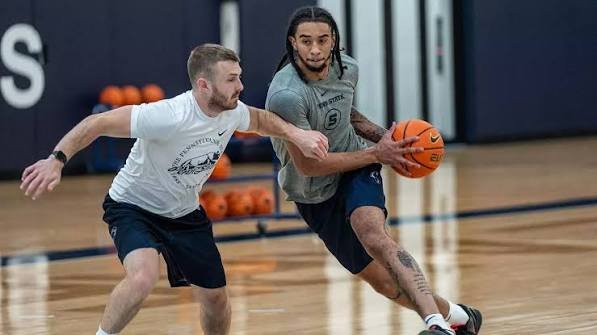
If you’ve recently heard the name Freddie Dilione, you’re probably wondering why basketball analysts and college fans continue to talk about his potential. While some players dominate headlines from day one, Dilione’s journey has been different. Instead of following a straight path to stardom, he’s steadily developed his game through high school, Tennessee, and later Penn State, showing flashes of the talent that made him one of the nation’s top recruits.
For basketball fans, scouts, or anyone tracking future professional prospects, understanding Freddie Dilione requires looking beyond simple statistics. His story is about growth, adapting to new roles, and learning how to turn natural scoring ability into consistent production against elite competition.
In this guide, you’ll learn about Freddie Dilione’s background, recruiting journey, early college career, playing style, and the qualities that make him one of the more intriguing young guards in college basketball. Whether you’re researching his career or evaluating his long-term potential, this article provides the context that basic player profiles often miss.
Who Is Freddie Dilione?
Freddie Dilione V is an American college basketball guard known for his scoring ability, athleticism, and versatility.
Originally from Fayetteville, North Carolina, he attended Word of God Christian Academy, where he quickly established himself as one of the state’s top basketball prospects. Standing approximately 6-foot-5 and weighing around 195 pounds, Dilione combines size with guard skills, allowing him to play multiple backcourt positions.
His combination of length, quickness, and offensive creativity attracted attention from major NCAA programs across the country.
Early Life and Basketball Beginnings
Like many elite prospects, Freddie Dilione began developing his game long before college recruiters started paying attention.
Growing up in North Carolina—a state with a rich basketball tradition—he regularly competed against talented athletes from an early age.
Several characteristics stood out even as a teenager:
- Smooth ball handling
- Natural scoring instincts
- Confidence attacking defenders
- Ability to create shots independently
Instead of relying solely on athleticism, Dilione gradually developed a balanced offensive game that included perimeter shooting, mid-range scoring, and finishing near the basket.
Those skills became the foundation of his future success.
High School Career
At Word of God Christian Academy, Freddie Dilione became one of the program’s standout players.
His performances consistently attracted college scouts, particularly because he demonstrated an ability to score in multiple ways rather than depending on one specific offensive skill.
During his high school years he earned recognition for:
- Consistent scoring production
- Leadership on the court
- Strong defensive effort
- Athletic versatility
Recruiting services eventually ranked him among the nation’s top guards in the Class of 2023, with ESPN listing him as a highly regarded four-star prospect.
Why College Coaches Wanted Him
Recruiters weren’t impressed simply because Dilione scored points.
They saw a player whose physical tools suggested even greater potential.
Among his biggest strengths were:
Excellent Size for a Guard
At 6-foot-5, he has the height to see over defenders while handling the basketball comfortably.
Shot Creation
Many young guards rely heavily on teammates to create opportunities.
Dilione showed he could generate offense on his own through ball screens, isolation plays, and transition basketball.
Athletic Upside
Quick first-step acceleration allows him to beat defenders, while his body control helps him finish difficult shots around the rim.
Long-Term Development
College coaches believed his ceiling remained significantly higher than his already impressive high school production.
That combination made him one of the more attractive recruits in his class.
Choosing Tennessee
After receiving interest from numerous Division I programs, Freddie Dilione committed to the University of Tennessee, joining one of the nation’s strongest basketball programs under head coach Rick Barnes.
For many recruits, choosing a school involves balancing several priorities.
In Tennessee’s case, the program offered:
- Elite coaching
- SEC competition
- National exposure
- Proven player development
- Opportunities to compete deep into March
Joining a roster filled with experienced players also meant that earning playing time would require patience.
That challenge became one of the defining themes of his early college career.
Life at Tennessee
Transitioning from high school basketball to the Southeastern Conference is rarely easy.
The speed, physicality, and defensive discipline increase dramatically.
During his time with Tennessee, Dilione appeared in limited minutes while learning behind veteran players. Injuries also affected part of his early season, reducing opportunities to establish a consistent role. Even so, the coaching staff valued his development and he earned recognition on the SEC First-Year Academic Honor Roll.
Although fans naturally focus on scoring numbers, development often happens away from the spotlight.
Young players typically improve in areas such as:
- Defensive positioning
- Reading offensive schemes
- Decision-making
- Strength training
- Shot selection
These lessons frequently determine whether talented recruits eventually become complete players.
What Tennessee Taught Him
One misconception among basketball fans is that limited playing time always means limited progress.
In reality, competing every day against experienced teammates often accelerates development.
At Tennessee, Dilione learned:
Patience
Elite programs usually feature older players who have already earned coaches’ trust.
Waiting for opportunities is part of the process.
Defensive Discipline
Coach Rick Barnes is widely respected for demanding strong team defense.
Playing within that system requires communication, effort, and attention to detail.
Playing Without the Ball
In high school, many elite recruits dominate possessions.
College basketball often requires moving without the ball and creating opportunities through spacing and timing.
These lessons may not immediately appear on the stat sheet, but they often shape a player’s long-term success.
Playing Style: A Natural Scoring Guard
Freddie Dilione is best described as a combo guard.
Rather than fitting exclusively into the point guard or shooting guard role, he can contribute in several ways depending on the team’s needs.
His offensive game includes:
Creating Off the Dribble
He is comfortable attacking defenders one-on-one and generating his own shot.
Mid-Range Scoring
While many modern guards rely almost entirely on three-point shooting, Dilione has shown confidence pulling up from the mid-range area when defenses collapse.
Transition Basketball
His athleticism makes him dangerous during fast breaks, where he can finish at the rim or create opportunities for teammates.
Offensive Versatility
Instead of depending on one scoring move, he mixes drives, floaters, pull-up jumpers, and perimeter shooting to keep defenders guessing.
Areas Still Developing
Like nearly every young player, Freddie Dilione entered college with room for improvement.
Some of the areas scouts have continued to monitor include:
- Consistency from three-point range
- Decision-making under pressure
- Defensive communication
- Ball security against elite defenders
- Playmaking efficiency
These aren’t unusual challenges for young guards adjusting to high-level college basketball.
In fact, many successful NBA guards refined these same skills over multiple college seasons before making the leap to professional basketball.
Why Scouts Continue to Watch Him
One reason evaluators remain interested in Freddie Dilione is that his physical tools cannot be taught.
Size, athletic ability, and natural shot creation are qualities that often separate high-level guards from average ones.
Just as importantly, his path illustrates that development isn’t always linear. Rather than judging a prospect solely by early statistics, scouts often focus on how a player adapts to new systems, improves decision-making, and responds to tougher competition. Those traits can be more predictive of future success than a single season’s scoring average.
Unique Insight: One overlooked aspect of Dilione’s development is that spending time in a structured, defense-first college system may ultimately increase his professional value. Guards who learn disciplined team basketball early often adapt more quickly when their offensive responsibilities expand later in their careers.
Transferring to Penn State
After his freshman season, Freddie Dilione entered the transfer portal and committed to Penn State, looking for a larger role and a fresh opportunity to showcase his abilities. For many college athletes, transferring isn’t about starting over—it’s about finding the right system that better matches their strengths and allows them to contribute more consistently.
At Penn State, Dilione joined a program focused on developing versatile guards who can score, defend, and make smart decisions with the basketball.
The move offered several potential benefits:
- Increased playing opportunities
- A chance to handle the ball more frequently
- Greater offensive responsibility
- An environment to continue refining his all-around game
For a young player with significant upside, finding the right fit can be just as important as raw talent.
How His Game Fits Modern Basketball
Modern basketball values players who can perform multiple roles rather than specialists who excel in only one area.
Freddie Dilione fits many characteristics that coaches seek today.
Positional Versatility
Instead of being limited to point guard or shooting guard, he has the size and skill set to play either position depending on the lineup.
Three-Level Scoring
Effective guards score from:
- Beyond the three-point line
- Mid-range
- At the rim
Dilione has shown flashes of all three.
Defensive Potential
His length and athleticism give him the physical tools to defend multiple backcourt players.
As his experience grows, defensive consistency could become one of the strongest parts of his game.
Strengths That Separate Him
Several qualities continue to make Freddie Dilione an intriguing prospect.
Natural Shot Creator
Generating offense without relying on teammates is one of basketball’s most valuable skills.
Dilione demonstrates confidence attacking defenders and creating space for his jumper.
Athletic Ability
His speed and explosiveness help him finish difficult plays while also creating transition opportunities.
Basketball IQ
Although still developing, he has shown encouraging signs of understanding spacing, timing, and offensive movement.
Competitive Mindset
Highly recruited players often face adversity when they reach college.
Dilione’s willingness to continue improving despite limited early playing time reflects maturity and resilience.
Areas for Continued Improvement
Like every developing player, there are parts of his game that can become more consistent.
Perimeter Shooting
Improving three-point efficiency would make defenders respect him farther from the basket and create more driving lanes.
Decision-Making
Recognizing when to attack, pass, or slow the offense is an important skill that typically improves with experience.
Defensive Consistency
Maintaining focus throughout every possession is essential at the highest levels of college basketball.
Physical Strength
Additional strength will help him absorb contact, finish through defenders, and guard stronger opponents.
These are common developmental areas for young guards and are often addressed through experience, coaching, and offseason training.
What Makes Freddie Dilione Different?
Many talented recruits enter college with impressive athletic ability.
What makes Dilione interesting is the balance between physical tools and long-term potential.
Instead of relying solely on speed or jumping ability, he possesses several foundational skills that coaches value:
- Ball handling
- Body control
- Shot creation
- Offensive versatility
- Size for his position
Because these skills are difficult to teach, many evaluators believe his ceiling remains higher than his current production suggests.
NBA Potential
Can Freddie Dilione reach the NBA?
The answer depends less on his natural talent—which is evident—and more on his continued development.
Players with his profile often improve significantly after gaining:
- More game experience
- Consistent minutes
- Stronger physical conditioning
- Better decision-making
- Greater shooting efficiency
If those areas continue progressing, he has the physical attributes and offensive skill set that professional scouts typically look for in modern combo guards.
While projecting any young player’s professional future is uncertain, his combination of size, athleticism, and scoring ability keeps him firmly on the radar of basketball evaluators.
Lessons Young Basketball Players Can Learn
Freddie Dilione’s journey offers valuable lessons beyond statistics.
1. Development Takes Time
Not every highly ranked recruit becomes an immediate star.
Growth often happens over several seasons.
2. Finding the Right Fit Matters
Choosing a program where your skills can develop may be more important than immediate recognition.
3. Stay Ready
Even limited playing time provides opportunities to improve through practice and preparation.
4. Adaptability Is a Strength
Successful athletes adjust to new teammates, coaches, and systems instead of resisting change.
Three Unique Insights About Freddie Dilione
1. His Patience May Become a Competitive Advantage
One overlooked benefit of spending time in a competitive college program is learning how to contribute without dominating the ball. Players who master this skill often transition more smoothly into larger roles later in their careers.
2. His Versatility Gives Coaches More Options
Rather than being locked into one position, Dilione’s ability to play on or off the ball increases lineup flexibility. In today’s game, that versatility can be just as valuable as elite scoring.
3. His Career Reflects the New Reality of College Basketball
The transfer portal has changed player development. Instead of viewing a transfer as a setback, many athletes now use it strategically to find systems that better match their strengths. Dilione’s move illustrates how adaptability has become an important part of building a successful college career.
Career Outlook
Freddie Dilione is still in the early stages of his basketball journey.
While his path hasn’t followed the immediate superstar trajectory some expected, his story is far from finished.
Many successful professional players required multiple college seasons before reaching their full potential.
If he continues improving his shooting consistency, defensive impact, and decision-making, he has every opportunity to become one of the more productive guards in college basketball and potentially earn professional opportunities.
For fans, his career remains one worth following because the combination of talent, work ethic, and experience suggests there may still be significant growth ahead.
FAQ
Who is Freddie Dilione?
Freddie Dilione is an American college basketball guard from Fayetteville, North Carolina. He gained national recognition as a highly rated high school recruit before playing at Tennessee and later transferring to Penn State. He is known for his size, athleticism, and scoring ability.
Why did Freddie Dilione transfer to Penn State?
Dilione transferred to Penn State in search of a better opportunity to expand his role and continue his development. A new coaching environment and increased playing opportunities can help young players showcase their full potential while continuing to refine their skills.
What position does Freddie Dilione play?
He is primarily considered a combo guard. Depending on the team’s needs, he can play as either a point guard or a shooting guard thanks to his ball-handling skills, scoring ability, and positional versatility.
What are Freddie Dilione’s biggest strengths?
His biggest strengths include shot creation, athleticism, size for a guard, and the ability to score at multiple levels. Coaches also value his versatility, which allows him to contribute in different offensive systems.
Does Freddie Dilione have NBA potential?
Yes, many evaluators believe he has NBA potential because of his physical tools and offensive skill set. Like many young prospects, his long-term outlook will depend on continued improvement in shooting efficiency, decision-making, defensive consistency, and overall experience.
Conclusion
Freddie Dilione’s basketball journey demonstrates that long-term success is rarely defined by one season or one destination. From becoming a highly regarded high school recruit to competing in the SEC and seeking new opportunities at Penn State, he has continued to develop both as a player and as a competitor.
His combination of size, athleticism, shot-making ability, and versatility provides a strong foundation for future growth. While there are still areas to refine, his willingness to adapt and embrace new challenges suggests his best basketball may still be ahead of him.
Whether you’re a college basketball fan, a scout, or simply following emerging talent, Freddie Dilione remains a player whose progress is worth watching in the seasons to come.
