
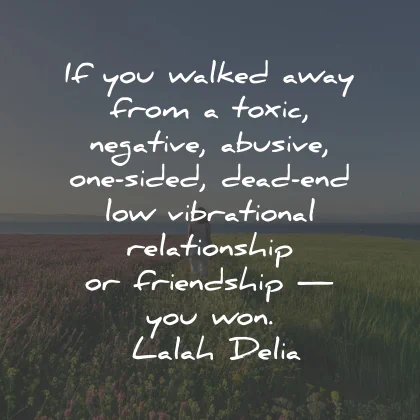
Some words hurt because they are cruel. Others are more difficult to recognize because they sound reasonable, caring, or even loving. Toxic manipulative quotes often fall into the second category. They can make you question your memory, feel guilty for having normal boundaries, or believe that keeping someone happy is your responsibility.
Manipulative language does not always come from someone who openly insults you. Sometimes it appears as a seemingly harmless comment such as “If you really cared about me, you would do this,” or “I guess I know where I stand now.” The words may be short, but their purpose can be to create pressure, fear, guilt, or emotional dependence.
Understanding these phrases is useful because recognizing a pattern is often easier than recognizing manipulation while you are experiencing it. This guide explains common toxic manipulative quotes, what they can mean in context, how to respond without escalating the situation, and how to distinguish genuine emotional communication from psychological pressure.
The goal is not to label every difficult conversation as toxic. Healthy relationships include disagreement. The difference is whether communication respects your choices, boundaries, and right to say no.
What Are Toxic Manipulative Quotes?
Toxic manipulative quotes are statements used to influence another person’s emotions or behavior through unhealthy pressure rather than honest communication.
The key issue is not necessarily the exact sentence. Context and repeated behavior matter more than one isolated comment.
For example, someone saying “I’m disappointed” is not automatically manipulative. A person is allowed to express disappointment.
But if they repeatedly say:
“After everything I’ve done for you, you can’t even do this one thing?”
the statement may be designed to make you feel indebted rather than to solve the underlying disagreement.
Common manipulation tactics include:
- Guilt-tripping
- Emotional blackmail
- Gaslighting
- Blame shifting
- Threats of withdrawal
- Playing the victim
- Silent treatment
- Excessive criticism
- Conditional affection
- Deliberately creating insecurity
The strongest clue is often what happens after the words are spoken.
If you regularly feel pressured to surrender a reasonable boundary just to restore peace, the communication pattern deserves attention.
Toxic Quotes That Use Guilt
Guilt is one of the most common tools of emotional manipulation because it makes the target focus on being a “good” or “bad” person instead of considering what they actually want.
Examples include:
- “If you loved me, you would do it.”
- “I would never treat you the way you’re treating me.”
- “After everything I’ve done for you, this is how you repay me?”
- “You clearly don’t care about me.”
- “I guess I’m always the one who has to make sacrifices.”
- “You should feel ashamed.”
What These Statements Are Doing
Instead of discussing the actual issue, the speaker changes the subject from the request to your character.
Imagine a friend asks you for money and you say no because you cannot afford it.
A healthy response might be:
“I understand. Thanks for being honest.”
A manipulative response might be:
“Wow. I thought friends were supposed to help each other.”
The second response attempts to make you prove that you are a good friend by changing your decision.
That’s an important distinction.
Quotes That Create Emotional Pressure
Some manipulative statements are not obviously aggressive. They create pressure by suggesting that refusing will cause emotional consequences.
Examples include:
- “Do whatever you want.”
- “It’s fine. I’m used to being disappointed.”
- “Forget it. I’ll just handle everything myself.”
- “I won’t ask you for anything again.”
- “Clearly, I can’t depend on you.”
- “You know what? Never mind.”
These phrases can be difficult to identify because the speaker may technically avoid making a direct demand.
The hidden message can be:
“Change your decision so I don’t have to feel this way.”
Why “Fine” Can Be Manipulative
The word “fine” itself is not toxic.
Someone may genuinely need time to process disappointment.
The problem occurs when phrases such as “Fine, do whatever you want” are repeatedly used to punish someone for exercising a boundary.
The difference is revealed through behavior.
If the conversation ends peacefully, it may simply be frustration.
If the person becomes cold, hostile, or punitive until you give in, the statement may be functioning as emotional pressure.
Gaslighting Quotes to Watch For
Gaslighting involves manipulating someone’s confidence in their perception, memory, or understanding of events.
Examples can include:
- “That never happened.”
- “You’re imagining things.”
- “You’re too sensitive.”
- “You’re making a big deal out of nothing.”
- “You always remember things wrong.”
- “Everyone agrees you’re the problem.”
- “You’re just being crazy.”
A single disagreement about what happened does not automatically constitute gaslighting.
People genuinely remember events differently.
The concern is a repeated pattern in which one person consistently dismisses reasonable questions or evidence and makes the other person doubt their ability to understand reality.
The Important Question
Instead of asking:
“Did they disagree with my memory?”
ask:
“Do they regularly use disagreement to make me distrust myself?”
That question is often more revealing.
Manipulative Quotes That Shift the Blame
Another common tactic is refusing to address harmful behavior by focusing entirely on the other person’s reaction.
Examples include:
- “I only acted that way because you made me.”
- “Look what you made me do.”
- “If you hadn’t said that, none of this would have happened.”
- “You’re the reason I’m angry.”
- “You caused this.”
- “This is all your fault.”
People can influence one another, but adults remain responsible for their own actions.
Being angry does not force someone to insult, threaten, intimidate, or mistreat another person.
A Healthier Version
Instead of:
“You made me lose my temper.”
healthy accountability sounds more like:
“I was angry, but I shouldn’t have spoken to you that way.”
The second statement acknowledges emotion without transferring responsibility for behavior.
Toxic Quotes Used to Control Relationships
Some statements are designed to restrict a person’s independence.
Examples include:
- “You don’t need anyone except me.”
- “Your friends don’t really care about you.”
- “Your family is turning you against me.”
- “Why do you need to go without me?”
- “If you leave, you’ll regret it.”
- “Nobody will ever love you like I do.”
- “You won’t find anyone better.”
These statements can gradually make someone feel that independence is dangerous.
That is more concerning when combined with controlling behavior involving friendships, finances, communication, clothing, work, or personal decisions.
Conditional Love and Affection
Healthy affection does not require constant obedience.
Manipulative language can turn affection into a reward.
Examples include:
- “I’ll love you when you start listening to me.”
- “If you cared, you’d prove it.”
- “Maybe I wouldn’t be angry if you were better at this.”
- “You don’t deserve my attention right now.”
- “I’ll talk to you when you apologize.”
There is nothing wrong with taking space after an argument.
The problem arises when affection is deliberately withheld as punishment until someone submits.
Love vs. Control
A healthy relationship says:
“We disagree, but I respect your decision.”
A controlling relationship may communicate:
“You are allowed to have a different opinion only if you accept the consequences I impose.”
That difference can be subtle but significant.
Toxic Manipulative Quotes in Friendships
Manipulation is not limited to romantic relationships.
Friendships can involve the same patterns.
A friend might say:
- “If you were really my friend, you’d come.”
- “You always choose other people over me.”
- “I guess I’m not important to you.”
- “Everyone else makes time for me.”
- “You owe me.”
- “After all I’ve done for you…”
Friendships naturally involve compromise, favors, and emotional support.
The problem starts when every favor becomes a debt.
A Useful Test
Ask yourself:
Can I say no without being punished?
If the answer is consistently no, the relationship may have an unhealthy dynamic.
A genuine friend may be disappointed by your decision, but they should still be able to respect your right to make it.
Toxic Workplace Manipulation Quotes
Manipulative language can also appear at work.
Examples include:
- “If you were committed to this job, you’d stay late.”
- “Everyone else is willing to do it.”
- “You should be grateful to have a job.”
- “Don’t make me question your loyalty.”
- “That’s not my problem. Figure it out.”
- “If you can’t handle this, maybe you’re not right for the team.”
Not every demanding workplace conversation is manipulation.
Managers can reasonably discuss deadlines, performance, and responsibilities.
The warning sign is when legitimate workplace expectations are mixed with personal guilt, threats, humiliation, or pressure unrelated to the actual job.
How to Respond to Manipulative Quotes
The biggest mistake people often make is trying to prove that the manipulator is wrong.
That can turn into an endless argument.
Instead, focus on your boundary.
Try These Responses
When someone guilt-trips you:
“I understand you’re disappointed, but my decision hasn’t changed.”
When someone questions your love:
“My feelings aren’t something I need to prove by doing something I’m uncomfortable with.”
When someone blames you for their behavior:
“You are responsible for how you respond to the situation.”
When someone denies your experience:
“We remember it differently, but I know what I experienced.”
When someone pressures you for an immediate answer:
“I’m not making a decision while I’m being pressured.”
These responses are intentionally simple.
You do not need a ten-minute explanation to justify a reasonable boundary.
What Not to Do When Someone Manipulates You
When emotions are high, certain responses can make things worse.
Avoid:
- Trying to diagnose the person during an argument.
- Responding with insults.
- Overexplaining every decision.
- Making threats you do not intend to keep.
- Accepting blame just to end the conversation.
- Assuming every disagreement is psychological abuse.
The goal is not to “win.”
The goal is to communicate clearly and protect your boundaries.
How to Tell Manipulation From Normal Conflict
This is one of the most important distinctions.
A healthy disagreement can involve:
- Anger
- Frustration
- Disappointment
- Different opinions
- Misunderstandings
- Temporary distance
None of these automatically makes a relationship toxic.
Manipulation is more concerning when there is a repeated pattern of pressure designed to control your choices.
Consider the difference:
| Healthy conflict | Manipulative conflict |
|---|---|
| “I disagree with you.” | “You’re a terrible person for disagreeing.” |
| “I’m disappointed.” | “You should feel guilty.” |
| “Can we discuss this?” | “Do it or I’ll punish you.” |
| “I need some space.” | Silent treatment until you surrender |
| “I remember it differently.” | “You can’t trust your own memory.” |
The pattern matters more than any single sentence.
Three Insights People Often Miss
Manipulation Can Sound Polite
Manipulation does not always sound aggressive.
A calm sentence such as “I just thought you cared about me” can create significant emotional pressure depending on the context.
Tone alone is therefore a poor way to identify manipulation.
The Real Target Is Often Your Boundary
Many manipulative statements are not really about the argument.
They are about what happens when you say no.
If the other person’s behavior becomes dramatically worse whenever you establish a boundary, that pattern can tell you more than the original disagreement.
You Do Not Need to Prove Someone Is Toxic
This is perhaps the most useful insight.
You do not need a psychological label to decide that a communication pattern is unhealthy for you.
If a repeated interaction leaves you frightened, controlled, constantly guilty, or unable to make ordinary decisions freely, you can take that seriously without diagnosing the other person.
When It May Be Time to Create Distance
Consider creating stronger boundaries if you repeatedly experience:
- Fear of saying no
- Constant guilt
- Pressure to explain everything
- Isolation from friends or family
- Threats or intimidation
- Repeated denial of obvious events
- Punishment for having independent opinions
- Conditional affection
- Escalating verbal abuse
If the situation includes threats, stalking, physical violence, or fear for your immediate safety, prioritize personal safety and seek help from trusted people or appropriate local support services.
Frequently Asked Questions
What are toxic manipulative quotes?
Toxic manipulative quotes are statements that attempt to control another person’s emotions, decisions, or behavior through guilt, fear, pressure, blame, or emotional punishment. The same sentence can be harmless in one context and manipulative in another. Repeated patterns are therefore more important than isolated phrases.
What are examples of emotional manipulation phrases?
Common examples include “If you loved me, you would,” “After everything I’ve done for you,” and “You’re too sensitive.” Other examples involve blame shifting, such as “You made me do this,” or attempts to undermine someone’s perception, such as “That never happened.” The key issue is whether the statement is being used to pressure or control someone.
How do you respond to toxic manipulative quotes?
Keep your response short and focus on your boundary rather than defending your entire character. Statements such as “I understand you’re disappointed, but my decision hasn’t changed” can prevent the conversation from becoming an endless debate. If the person continues escalating, ending the conversation may be more productive than arguing.
Is saying “If you loved me” manipulation?
It can be, particularly when the phrase is used to pressure someone into doing something they have already declined. Healthy relationships allow people to say no without having their love or loyalty questioned. Context matters, but repeatedly using affection as leverage is an unhealthy communication pattern.
How can you tell manipulation from normal relationship conflict?
Normal conflict allows both people to disagree, express emotions, and maintain personal boundaries. Manipulation repeatedly uses guilt, fear, punishment, blame, or confusion to make one person surrender those boundaries. Looking at the pattern over time is usually more useful than analyzing one argument.
Conclusion
Toxic manipulative quotes can be powerful because they often target something deeply human: our desire to be loved, understood, accepted, and seen as a good person.
The most important thing to remember is that difficult communication is not automatically manipulation. People can become frustrated, defensive, or emotional without deliberately trying to control someone. What matters is the repeated pattern and whether communication respects your autonomy.
If certain phrases consistently leave you feeling guilty for having reasonable boundaries, questioning your own reality, or responsible for another person’s behavior, pay attention to that pattern.
You do not have to win an argument to protect yourself. Sometimes the healthiest response is a calm boundary, less explanation, and the willingness to step away from a conversation that has stopped being respectful.
